
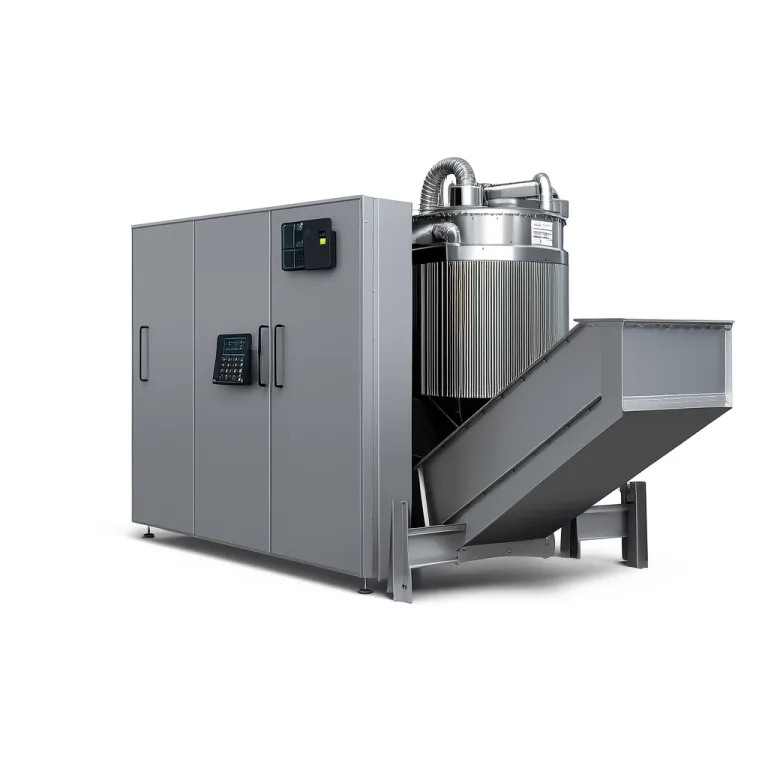
Foundry Sand Reclamation System
Foundry Sand Reclamation System for industrial applications.
About Foundry Sand Reclamation System
Foundry Sand Reclamation System for industrial applications.
| Domain | casting |
|---|
Who Works With Foundry Sand Reclamation System?
7 engineering roles are connected to Foundry Sand Reclamation System based on verified research evidence.
Operations Technician
Service Technician
The title denotes a field-based technical role responsible for servicing, maintaining, and troubleshooting rotary tillers — consistent with the widely recognized 'Service Technician' occupational category in agricultural engineering. Responsibilities (hydraulic checks, gearbox lubrication, tine replacement, calibration) confirm hands-on maintenance and operational support functions. While 'Rotary Tiller' is product-specific, the core role maps to the standardized 'Service Technician' with agricultural equipment specialization.
Metallurgist
Metallurgist is a well-established, globally recognized engineering profession (e.g., licensed in many jurisdictions, ABET-accredited programs, SME/ASM professional societies). In the context of Vacuum Induction Melting (VIM) furnaces — used for producing high-purity superalloys, titanium, and specialty steels — metallurgists play core technical roles: specifying furnace parameters (vacuum level, induction frequency, crucible materials), designing melting cycles, interpreting microstructure/chemistry outcomes, troubleshooting defects (e.g., gas pickup, segregation), validating melt quality via testing, and advising on maintenance of refractory linings or induction coils based on metallurgical degradation mechanisms.
Maintenance Technician
Operator
Operators are a well-established, widely recognized professional role in industrial automation contexts. In robotic manufacturing, Operators oversee and monitor robot execution of tasks (e.g., welding, assembly), ensure safe operation, perform routine visual/functional checks, and intervene when anomalies occur — aligning with OPERATE and INSPECT relationships. The term is generic (not product-specific) and distinct from technicians or engineers; it reflects a core frontline production role.
Foundry Technician
Melt Shop Staff refers to personnel operating and overseeing the melt shop — a core foundry area where metal is melted, alloyed, and poured. In the context of a Foundry Sand Reclamation System, they interact operationally (e.g., feeding spent sand, monitoring melt quality affected by sand reuse, reporting contamination issues). While 'Melt Shop Staff' is a collective/colloquial term, it maps reliably to the recognized industrial role of Foundry Technician (or Melt Shop Operator), a standard title in foundry engineering and metallurgical operations. The role is not product-specific (i.e., not named after the reclamation system), but functionally engaged with it during daily operations.
Process Engineer
Beverage Process Engineer is a recognized engineering role specializing in process design, validation, and compliance for beverage manufacturing systems. While 'Beverage' denotes industry context (not product-specific specialization), the role directly engages with ribbon blenders — particularly in specification, commissioning (including IQ/OQ), CIP/SIP integration, and 3-A sanitary validation — all cited in job listings. 'Process Engineer' is the canonical, general professional title; 'Beverage' reflects domain application, not an inseparable part of the core role definition.